Your Attic Insulation May Need a ‘Reset’
Your attic space has a huge impact on your home’s overall comfort, acting as a thermal and moisture barrier when insulated properly. But roughly 90% of those important spaces may be under-insulated by today’s standards1 – and your attic may be one of those.
When it comes time to upgrade your attic insulation, you have a choice to make: should you remove the existing insulation before adding new or just blow in more insulation right over the old? On the surface, it seems so much simpler and cheaper just to ‘top off’ your existing insulation with new, but homeowners should weigh several elements before giving in to that temptation to ensure the long-term performance of such an important investment.
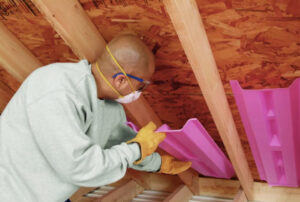
Consider Your Home’s Health and Air Quality
The things hiding in your attic space can affect the health and air quality throughout your entire home, especially:
- Pest Contamination: Rodents often leave waste, urine, and nesting materials in your attic that harbor strong odors and bacteria – even after they are long gone.
- Mold and Mildew: Old, damp materials trap moisture against structural wood, threatening indoor air quality and risking rot if it remains undetected.
- Dust and Allergens: Decades of accumulated allergens in old fibers can circulate through your living spaces every time your HVAC system runs.
Impact on Energy Efficiency and Performance
Even a well-insulated attic space can degrade over time or create performance problems.
- Compaction and Loss of R-Value: Old insulation settles, compresses, and loses its thermal resistance over time.
- Impeded Air Sealing: Technicians cannot effectively seal cracks and gaps in the framing or attic floor if old, dirty material blocks access.
- Unresolved Damage: Layering new material on top could mask underlying structural problems, leaks, or electrical hazards instead of bringing them to the forefront.
A ‘simple’ attic insulation project may not be all that simple when you take into consideration the possible vulnerabilities and potential problems that could arise. Make sure you know how to tackle your project by answering some important questions.
Questions to Ask
- What type of insulation currently exists?
Older attics could contain a combination of degraded, or possibly even contaminated materials. An inspection by a reliable insulation contractor can help you make an informed decision about removing the old insulation to diminish future problems. Keep in mind, you’ll have fewer performance issues with new and uniform materials throughout the space.
- Has there been any previous damage or infestation (water, pests, contaminants)?
If you’re not the original owner, this becomes tougher to determine. Yet knowing the answers can give you a better idea of how to proceed with attic insulation. You can certainly inspect for signs of water marks/damage, the presence of pests or degraded materials yourself. But a reputable insulation contractor can provide more details about any active problems.
- Are the existing air seals and vapor barriers in good condition?
With the old insulation still in place, it’s often difficult to examine the existence or condition of air sealing at the penetration points throughout the attic – top plates, chases, wiring and plumbing, recessed fixtures, duct transitions other leakage points. It’s also much more difficult to repair those areas when they do need attention.
- Is the attic properly ventilated?
A professional insulation contractor will be able to assess the ventilation situation in your attic. Merely layering new insulation over old without proper ventilation can trap contaminants and create an environment that actually promotes microbial growth.
If you are unsure of how to proceed with your attic insulation project and want to avoid hidden issues that can drive energy loss and comfort problems in the future, it’s best to seek out the professionals.
Go To The Pros
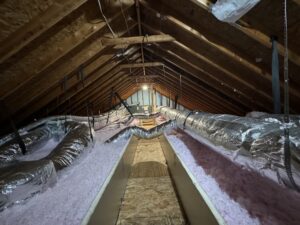
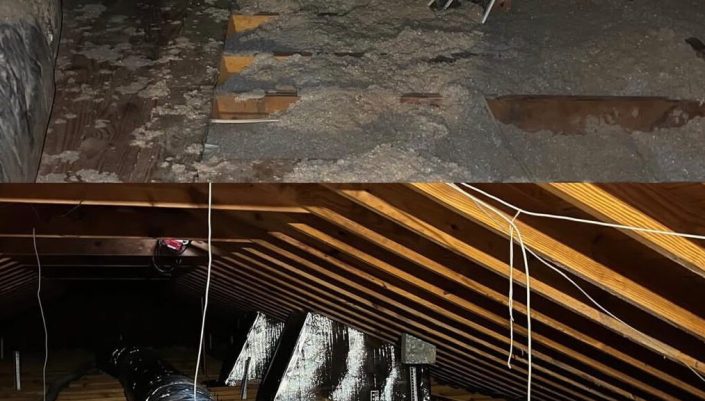
Zhe Industries is a big proponent of a proper attic insulation reset – removal, inspection, targeted air sealing, and then re-insulation with new, quality materials. This process delivers cleaner conditions and long-term thermal performance, which translates to a happy, healthy, comfortable home.
1NAIMA estimate based on Boston Univeristy study. “Under-insulated” here means when compared to the minimum prescriptive wall and ceiling insulation R-values found in the 2006 International Energy Conservation Code (IECC).