Top Ventilation Upgrades for Healthier Indoor Air Quality in Your Home
Your home should be a place where you can breathe comfortably and feel confident about the environment your family is living in every day. But in Hampton Roads, Virginia, the same features that help keep homes comfortable and energy efficient can sometimes limit natural air exchange.
Modern insulation, air sealing, and energy-efficient windows can reduce unwanted drafts and help control heating and cooling costs. However, a home that’s too tightly sealed needs a thoughtful ventilation strategy so indoor pollutants, excess humidity, odors, and other contaminants don’t accumulate.
Signs Your Home May Need Better Ventilation
Your home may benefit from a ventilation evaluation if you regularly notice:
- Condensation on windows
- Persistent bathroom humidity
- Lingering cooking odors
- Stale or stuffy rooms
- Excessive indoor humidity
- Musty smells
- Poor airflow in certain areas
- Dust accumulating quickly
- Rooms that feel uncomfortable despite normal HVAC operation
These symptoms don’t necessarily mean ventilation is the only issue. They can also point to insulation, air leakage, ductwork, HVAC, or moisture problems.
The good news is that improving your home’s comfort can be tackled in a number of ways.
Top Ventilation Tips
1. Assess Your Current Ventilation System
You can better pinpoint the necessary actions by starting with a professional assessment to determine the existing air exchange inside your entire home. An experienced insulation contractor can evaluate your home’s size, air-tightness, and existing ventilation before recommending appropriate solutions.
2. Pair Ventilation with Targeted Air Sealing
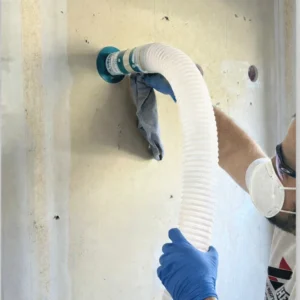
Ventilation and air sealing aren’t competing strategies—they serve different purposes. Air sealing reduces uncontrolled air leakage through gaps and penetrations in the building envelope. Ventilation provides intentional air exchange where and when it’s needed. This combination is especially important after insulation improvements. For example, sealing gaps around plumbing penetrations, wiring, recessed lights, ductwork, doors, and other openings can make your HVAC system’s job easier. A properly designed ventilation system can then provide controlled fresh-air exchange without relying on random drafts.
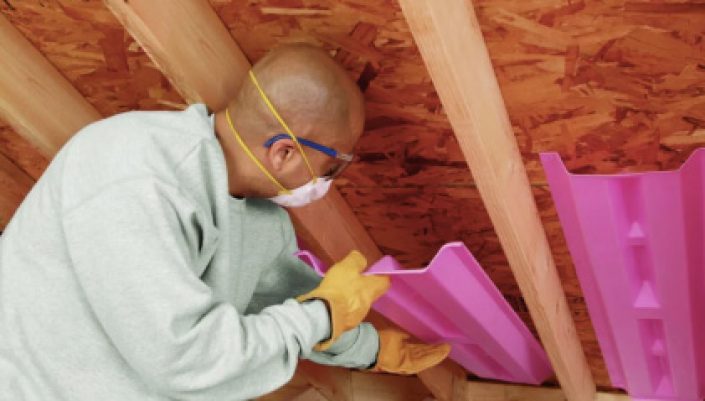
3. Ensure Proper Soffit Baffle Placement
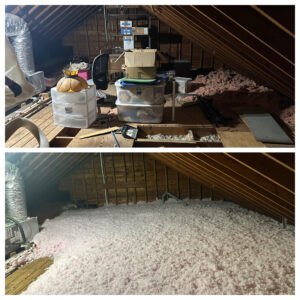
Soffit venting is a simple but often overlooked remedy for the problem of indoor humidity in so many Hampton Roads homes. These baffles or vents are installed along the soffits on the underside of the roof overhang to bring fresh outside air into the attic. The steady air flow intake is a critical part of a balanced ventilation system to help regulate attic temperature and manage moisture. When properly designed and installed, soffit venting reduces the risk of mold and wood rot, helps prevent wintertime ice dams and supports longer roof and insulation life.
4. Address Attic and Crawl-Space Ventilation
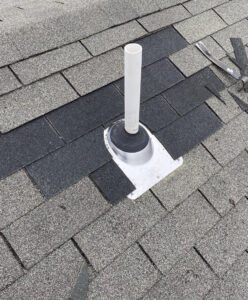
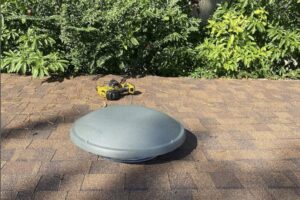
Attics and crawl spaces require their own ventilation and moisture-control strategies, and simply adding vents isn’t always the answer. For example, an attic may use soffit and ridge ventilation as part of a properly designed vented assembly. A crawl space may require a different approach depending on its construction, moisture conditions, and whether it is vented or conditioned. The key is to look at the entire building envelope. Poorly planned ventilation can sometimes introduce more humid outdoor air without addressing the underlying problem.
Why Insulation and Ventilation Should Be Planned Together
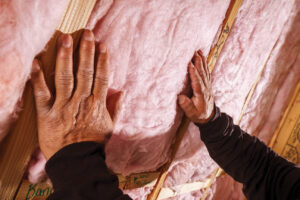
Insulation is an important part of an energy-efficient home, but it doesn’t work in isolation. A properly designed building envelope combines insulation, air sealing, moisture management, HVAC performance, and ventilation. Improving one component can affect the others. For example, adding insulation without addressing air leakage can leave important gaps in the building envelope. Conversely, extensive air sealing can reduce natural air leakage, making intentional mechanical ventilation more important. That’s why a whole-home approach is often more effective than installing individual upgrades without considering how they interact.
Improve Your Hampton Roads Home From the Inside Out
For homeowners in Hampton Roads, improving indoor air quality starts with understanding how the entire home works as a system. Better insulation can improve energy efficiency and comfort. Air sealing can reduce unwanted drafts and leakage. Proper ventilation can provide controlled fresh-air exchange. And moisture management can help protect both the home and the people living in it.
If you’re considering an insulation upgrade, it’s a good time to evaluate ventilation at the same time. A qualified insulation contractor can pinpoint opportunities to improve the building envelope and determine whether additional ventilation measures should be considered. The goal isn’t simply to make your Hampton Roads home tighter. It’s to make it tighter, more comfortable, energy efficient, and properly ventilated.
Trusted Local Experts Are Here to Help
If you need help determining where to start, the experts at Zhe Industries are here for you. Zhe Industries is Licensed Beyond Insulation™️ and an Owens Corning® Certified Energy Expert®. We evaluate whether your attic has adequate ventilation and recommend improvements where needed. Our team of building envelope specialists can troubleshoot airflow issues, identify blocked or undersized venting, and install properly balanced intake and exhaust ventilation to help reduce excess heat and moisture—protecting your roof system while improving comfort and energy efficiency.
As a Class A Contractor, we specialize in creating comfortable, energy-efficient homes throughout Hampton Roads, including Virginia Beach, Norfolk, Chesapeake, and Williamsburg.