Is Your Bathroom Fan Venting Into the Attic?
Every time someone in your home takes a hot shower, the bathroom fan pulls warm, wet air out of the room. The question is where that air goes next. In many Hampton Roads homes, the answer is the attic. The fan sounds like it’s working fine, but the duct was never connected to the outside, came loose years ago, or is crushed and buried under insulation.
It’s one of the most common problems we find in Virginia Beach, Chesapeake, and across Hampton Roads, and one of the easiest to miss, because you can’t see it from inside the house.
Why a Bathroom Fan Should Never Vent Into the Attic
When the duct ends in the attic, or near a soffit or gable vent without a real connection, shower moisture doesn’t leave the house. It just moves upstairs. There, that warm, moist air reaches cooler surfaces like the roof sheathing, rafters, roofing nails, and the duct itself, and turns back into water. On cold nights it can even frost on the underside of the roof deck. The U.S. Department of Energy’s Building America Solution Center warns that moisture from exhaust fans venting into the attic “can cause mold growth and damage to the wood in the attic.” Over time, you may see:
- Mold or dark staining on the underside of the roof decking
- Rusty roofing nail tips, and drips or water spots on the ceiling below
- Wet, matted insulation that has lost much of its R-value
- Musty smells and higher humidity in the house
The Mistake Many Contractors Make: Burying It
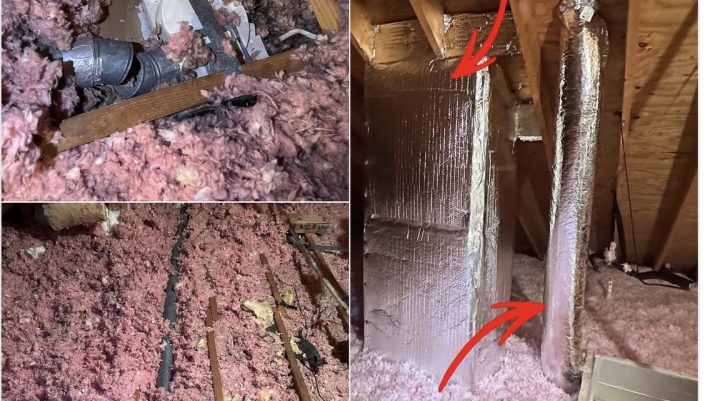
Here’s the part most homeowners never hear about. When an attic gets “topped off” with new insulation, the bath fan and its duct often get buried right along with everything else. Nobody checks whether the duct is still attached. Nobody checks where it ends. New insulation simply gets blown over the top.
Burying a disconnected or crushed duct doesn’t fix anything. It makes the problem worse:
- The moisture gets released under the insulation. Instead of drifting into open attic air, the shower moisture soaks into the insulation from below, right on top of your ceiling.
- Wet insulation stops insulating. Damp, matted insulation loses R-value, so you pay for new insulation that isn’t performing.
- The problem is hidden. Once a duct is buried, no one can see that it’s loose, kinked, or dumping into the attic until stains show up on the ceiling or the roof deck.
- Buried ducts get crushed. Over the years, the weight of insulation and foot traffic flattens flex duct or pulls it off the fan, so the fan blows into the attic even though it sounds normal.
This is exactly why we believe in a proper attic insulation reset instead of a top-off. When the old insulation comes out, every fan housing and duct is in plain view, and we can see what’s connected, what’s crushed, and what was never run outside.
What Virginia Code Says About Bath Fan Venting
Virginia’s building code is clear: bathroom exhaust has to go outdoors. Homes in Virginia Beach, Chesapeake, and the rest of Hampton Roads are built under the Virginia Uniform Statewide Building Code. Its residential code, the 2021 Virginia Residential Code, has been in effect since January 18, 2024. Here is the exact wording:
M1501.1 Outdoor discharge. “The air removed by every mechanical exhaust system shall be discharged to the outdoors in accordance with Section M1504.3. Air shall not be exhausted into an attic, soffit, ridge vent or crawl space.”
M1505.2 Recirculation of air. “Exhaust air from bathrooms and toilet rooms shall not be recirculated within a residence or circulated to another dwelling unit and shall be exhausted directly to the outdoors. Exhaust air from bathrooms, toilet rooms and kitchens shall not discharge into an attic, crawl space or other areas inside the building.”
In plain English, “outdoors” means outdoors. An attic, soffit, or ridge vent doesn’t count, and a duct that stops near a vent is still exhausting into the attic. (This is a plain-language summary, not legal advice. Your local building official interprets and enforces the code.) You can read more on our bathroom exhaust venting page.
How to Tell If Your Bath Fan Vents Into Your Attic
You can do a quick check yourself. Watch for these signs:
- Look outside. Find the bathroom on the outside of the house and look at the roof or wall above it. If you don’t see a vent cap for the fan, the duct may end in the attic.
- Check the ceiling. Water spots or stains on the ceiling near the fan, or drips coming from the fan grille, can mean condensation in the duct.
- Notice the steam. If the mirror stays fogged long after the fan has been running, the duct may be crushed, kinked, or disconnected.
- Check the attic. A musty odor, or dark staining, mold, or rusty nail tips on the wood above the bathroom, are moisture warning signs.
- Find the duct. If it’s safe to get into your attic, follow the duct from the fan. It should run to a vent cap and attach to it. If it ends on the attic floor, points at a soffit, gable, or ridge vent, or disappears under the insulation, it’s likely venting into the attic.
- Check the duct itself. Bare foil or uninsulated duct sweats in a cool attic, and long runs with sags and sharp bends cut airflow.
Be careful in the attic. Step only on framing, wear a mask and gloves, and don’t disturb wiring.
How We Fix It During an Attic Insulation Removal and Replacement
The best time to fix bath fan venting is while the old insulation is out. Here’s how our process works:
- Air seal the fan housing. Our crew seals the gaps around the exhaust fan housing so attic air and bathroom air stay where they belong.
- Install a dedicated roof vent. Our experienced roofing partner installs a GAF Master Flow™ Bath & Dryer Rooftop Appliance Vent, a dampered vent made for bathroom exhaust fans.
- Run R-6 insulated duct. Our crew runs 4-inch R-6 insulated flexible duct from your existing fan to the roof vent, sealed at both ends, on a route that’s as short and straight as practical. The insulation keeps the inner liner warm, so moisture stays in the air until it leaves through the roof instead of condensing inside the duct.
- Test the airflow. At the end of the job, we run the fan to check that air is moving out through the roof vent.
- Re-insulate around it. Then the attic gets fresh insulation, and nothing gets buried that shouldn’t be.
Please note: we correct bathroom exhaust venting as part of our attic insulation removal and replacement packages, not as a standalone service. We also don’t replace fans or add timers or switches. We fix the part that usually fails in the attic: the duct and its connection to a proper roof vent.
Bath fan venting is one piece of a healthy attic, along with proper attic ventilation and air sealing. For more, see The Importance of Proper Attic Ventilation, Attic Moisture Solutions in Hampton Roads, and Top Ventilation Upgrades for Healthier Indoor Air Quality.
Frequently Asked Questions
Is it OK for a bathroom fan to vent into the attic? No. The 2021 Virginia Residential Code requires bathroom exhaust to go directly outdoors, not into an attic, soffit, ridge vent, or crawl space. Venting into the attic puts shower moisture on the roof decking and insulation, which can lead to mold, stains, and wet insulation.
Can my bathroom fan vent through the soffit or a ridge vent? We don’t recommend it. Attic air flows in at the soffits, so moist air released there can get pulled right back into the attic, and the code specifically says air “shall not be exhausted into” a soffit or ridge vent. We use a dedicated, dampered roof vent installed by our roofing partner.
My bath fan duct is buried under insulation. Is that a problem? Often, yes. Buried flex duct gets crushed or pulled loose over the years, so the fan blows into the attic even though it sounds normal. During an attic insulation removal and replacement, we uncover it, replace it with R-6 insulated duct to a proper roof vent, and then insulate around it.
Do you fix bathroom fan venting as a standalone service? No. We correct bathroom exhaust venting as part of an attic insulation removal and replacement package. The roof vent and new insulated duct go in while the old insulation is out, before the attic is re-insulated, so the fix is done right and nothing gets buried again.
Do you replace bathroom fans or add timers? No. We don’t replace fans, add timers or humidity switches, or do electrical work. If your fan itself needs replacing, a licensed electrician can handle that.
Trusted Local Experts Are Here to Help
If your attic insulation is due for an upgrade, don’t let a buried bath fan duct turn new insulation into a new moisture problem. The experts at Zhe Industries will remove the old insulation, check every bath fan duct, fix the venting the right way, air seal, and re-insulate. Zhe Industries is Licensed Beyond Insulation™ and an Owens Corning® Certified Energy Expert®.
As a Class A Contractor, we specialize in creating comfortable, energy-efficient homes throughout Hampton Roads, including Virginia Beach, Norfolk, Chesapeake, and Williamsburg. Contact us for a free estimate on attic insulation removal and replacement, and we’ll make sure your bathroom fan vents outdoors as part of the job.